Pages

Thursday, 10 January 2019

Summer Learning Journey, Week 3, Day 2

DAY 2: The Air Up There

Activity 1: Bee Informed [4 points]

One of the most important, but least talked about, animals in New Zealand is the bumblebee. It was first introduced to New Zealand in 1885 to help pollinate a special plant called the ‘Red Clover.’ Today, bumblebees do many other important jobs, including the pollination of greenhouses and orchard crops. If the bees did not pollinate the plants, they would not survive.
For this activity, we would like you to bee-come detectives and to learn more about the mysterious, and often ignored, bumblebee. We will provide you with five sentences about bumblebees from the NZ Bumblebee Conservation Trust website and it is your job to fill in the blanks with the missing information about bees. Choose the phrase/word that makes the most sense from the list at the bottom. (Each phrase/word can only be used once).
To earn full points for this activity you must type all five sentences and then fill in the blanks for each one. Post the completed sentences on your blog.

Unbee-lievable Facts about Bumblebees
  • The word ‘bumblebee’ is a compound word (bumble + bee). The word ‘bumble’ means to Move and act awkward.

  • Bumblebees can fly very quickly. They can reach ground speeds of 3.2 kilometres per hour (km/h).

  • Bumblebees are very strong! They carry up to 90 percent of their body weight in food with them to avoid starvation.

  • Bumblebees can do more work and carry more pollen than other bees, including honeybees. In fact, they can do up to 50 times as much work as a normal honeybee.

  • The number of bumblebees is declining in New Zealand due to a number of factors, including the  removal of wildflowers and flowering tress, habitat loss,extensive use of pesticides. ...hum, buzz, or drone.


Activity 2: Carbon Sinks Don’t Stink! [4 points]
Every day a chemical compound called carbon dioxide (CO2) is produced and released into the air.  If it isn’t removed, it can become toxic for humans. Fortunately, there are a number of places where CO2 is absorbed (removed from the air). Two of the most common places are forests and oceans. They are called ‘carbon sinks’ because, like a sink, they gather, clean and drain things away that we don’t want. One of the largest carbon sinks in New Zealand is a forest in the south-western part of the South Island. It drains away 60% of our unwanted carbon!
Let’s imagine that you could design a sink that could gather up and then drain away any foods that you don’t like. On your blog, tell us what you would put in your special sink. If it was me, I would put rice pudding, brussel sprouts, custard, parsnips, and seafood chowder in the sink. Yuck! What about you?
On your blog, list all of the foods that you would put in your special draining sink..

1. Broccoli.
2.mushrooms.
3.Fish.
4.Tuna.
5.Blue cheese.
6.Sardines.
7.Cauliflower.

Activity 3: Flying Fungi [10 points]

In the middle of winter it can get quite wet and damp in New Zealand, can’t it? When it gets really damp, it is common for things like mould and fungi to start to grow. We can often see them on the walls, ceilings or floors of our houses or outside on footpaths, buildings or roadways. Some types of mould and fungi are so small that they can’t be seen. Some of these tiny fungi/mould can be found in the air. They are called ‘airborne fungi’ and they can be unhealthy for us.
Let’s imagine that we tested the air in your classroom and found 7 different kinds of mould. Eek! The cleaner says that it takes 5 days for each mould to be eradicated (removed). If the school had to remove each mould one at a time, how long would it take to remove all the mould from the classroom?

On your blog, tell us how you would solve this tricky maths problem. Be sure to also post your final answer in days or weeks.

If there is 7 moulds and it takes 5 days for each one to get rid off you just have to do 7x5. So the answer is 35 days.
35 days



Wednesday, 9 January 2019

Summer Learning Journey, Week 3, Day 1

DAY 1: A Heated Debate

Activity 1: Togs or Trackies? [4 points]
New Zealand is a pretty lovely place to live, isn’t it? Apparently, New Zealand (NZ) is also a pretty lovely place to visit. In 2017 approximately 2-3 million people came to visit NZ as tourists. Some of them chose to come in the middle of our summer, while others braved it and came in the middle of winter! When do you think is the best time of year (season) to visit NZ?
If you would like some help making a decision, feel free to read the Go New Zealand website. It has lots of information about the seasons in NZ!
I, personally, encourage my friends and family from overseas to come and visit NZ in early spring. The weather is usually warm and dry and the tourist attractions, beaches and holiday spots are less busy than they are in the middle of summer.
On your blog, tell us what time of year you think is best for tourists for come and visit. Be sure to share at least three things that tourists could do while they were here in NZ.
I think Summer. The reason I think summer is because you can go for a swim at one of our amazing beaches or pools. You can go on boats and trips around the islands. Also you can on native bush walks.

Activity 2: You are my Sunshine [4 points]

People in New Zealand love spending time outdoors. Unfortunately, the sun is very powerful and the rates of skin cancer are incredibly high in New Zealand. In fact, they are higher than anywhere else in the entire world! To protect ourselves against skin cancer, we need to be careful about how much time we spend in the sun. We have to be ‘Sunsmart.’

Read the Sunsmart website.

On your blog, list five different things that we can do to protect ourselves from the sun this summer!
1. Put sunscreen on.
2. Wear a sunhat.
3. Go before it gets to hot.
4. Cover up when you are outside.
5.If you are not playing outside stay in the shade.


Activity 3: Burning Up… [15 points]
While it can get hot in New Zealand, especially in the middle of summer, it gets even hotter in places like Dallol (Ethiopia), Dasht-e Loot (Iran), Tirat Zvi (Israel), Kabili (Tunisia) and Bandar-e Mahshahr (Iran).
The hottest temperature on record in each place is: Dallol: 41oC; Dasht-e Loot: 71oC; Tirat Zvi: 54oC; Kabili: 55oC; Bandar-e Mahshahr: 51oC. Crazy ‘eh?!
For this activity, you are asked to use this information to create a graph. The graph should have a title along with the names of each city and their hottest recorded temperatures. You can draw the graph by hand or use a computer programme like Google Draw to create your graph. It’s completely up to you!


On your blog, post a picture of your graph..

Tuesday, 1 January 2019

Summer Learning Journey, Week 2, Day 5

DAY 5: Wasting Away


Activity 1: Off the Menu [4 points]
Fishing is a really common activity in New Zealand. In fact, people have fished in New Zealand for centuries. Unfortunately, over the past few decades some people have caught too many fish in one area and left the region without enough fish to refill (replenish) the stocks. When this happens we call the area ‘overfished’ and it is closed to all private and commercial fishing. If people are caught fishing in these areas, they are required to pay a fine (money). The maximum fine for fishing in a restricted area is $100 000.
What do you think about this rule? Is it fair that people are charged up to $100 000 for overfishing?
On your blog, tell us what you think about this rule and why you think it!.
I think it is good because people should not over fish. Because there won't be enough for everyone. But if you did not know about about it they should not be fined. But if you are not allowed to fish in that spot they should put a sign there. I think they could out the fine money a little bit lower because that is a lot of money.


Activity 2: The Black Drain [4 points]
Approximately two-thirds of all rivers and one-half of all lakes in New Zealand are too polluted to swim in, according to a recent article in an online newspaper. One of the most polluted is the Tarawera River in the Bay of Plenty region of New Zealand. Pollution enters the river from a local pulp and paper mill, from local farms and through the local sewage system. Many other rivers in New Zealand are also polluted with waste from businesses and farms.
Use Google to help you find two other polluted rivers in New Zealand.

On your blog, tell us:
1) The names of the rivers. 2) The location of the rivers. 3) What is being done to clean up the rivers (if anything).

1.Avon River. Is in Christchurch, to help they are planting trees and plants.
2. Waikato River. Is in Hamilton, to help the council might put warning signs up.


Activity 3: Faded Glory [5 points]

The Great Barrier Reef is the world’s largest coral reef system, made up of 2900 individual reefs. It is so big that it can actually be seen from space! The reef is located on the east coast of Australia and many people believe that it is millions and millions of years old. For most of its life, the reef has been a healthy, vibrant ecosystem. Over the past thirty years, however, it has changed dramatically. Much of the beautiful bright coral has become bleached and has lost its colour. Sections of the reef have also been damaged by tourists, cyclones and the introduction of new, damaging invasive species.
The Australian government is working to protect and preserve the reef. Each year they spend about $200 million dollars repairing and protecting the reef. It is a lot of money and they could really use some help raising the money (funds) required to repair the reef. This is where you come in!

On your blog, list three different ideas or strategies for raising funds to preserve the Great Barrier Reef. What could you do to fundraise here in New Zealand?
1.Perform Kapa Haka.
2.Clean beaches and pick up rubbish so you can get sponsors.
3. Bake sale and sausage sizzle.

Sunday, 30 December 2018

Summer Learning Journey, Week 2, Day 4

Activity 1: Planes, Trains and Automobiles [4 points]
Arguably, one of the most dramatic and spectacular (beautiful) places to visit in New Zealand is Milford Sound. It has been referred to as the ‘eighth wonder of the world.’ It is a beautiful fiord (steep valley) that was formed when big pieces of ice (glaciers) melted. The melted glaciers created a beautiful river that is surrounded by dramatic cliffs and snow-capped mountains. People who visit Milford Sound are able to take a boat cruise through the middle of the fiord, walk around the area on the Milford Track or fly above the fiord as part of a private helicopter tour.

Let’s imagine that you had the chance to visit Milford Sound by boat, foot (walking) or air (helicopter). Which option would you prefer?
On your blog tell us which of the three options you would take to explore Milford Sound. Be sure to tell us why you have chosen this option.
I would not walk because I would just complain and I am afraid of heights. SO I would go with boat. I would go with a boat because I like the breeze when you go out on the deck and you sit down or stand of anytime. Sometimes they have toilets and Because I love the view when you are standing at the edge of the boat.


Activity 2: It’s All in the Name [4 points]
Rotorua is one of New Zealand’s most popular tourist destinations. It is a city filled with incredible forests, mountain biking tracks, lakes, and geothermal wonders, including hot springs (geysers) and mud pools. One of the most famous geothermal pools is called the Devil’s Bath at Wai-o-Tapu Thermal Wonderland. It is a neon green pool of stinky water.
Over the years, people have suggested that we come up with a new name for the pool. What do you think we should call it? Take a minute to let your creative juices flow.
On your blog, give us a list of three to five options for the name of this geothermal pool. Put a star (*) beside the name that you like the most.

1.Green dump.
2.Monster legend.
3. Mysterious pond.*
4.Wild point.

Activity 3: Picture Perfect [10 points]
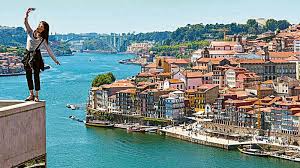
While New Zealand is home to some beautiful waterfalls, there are a number of stunning waterfalls in places like Canada and South Africa. In Canada, the largest waterfall is called Niagara Falls. It sits on the border between Canada and the United States of America. Thousands of tourists flock (go) to Niagara Falls every year to see the falls and to have their picture taken in front of this natural wonder. Over the past few years people have started taking ‘selfies’ and posting them online. Do you ever take selfies?
For this activity, choose one of the following three selfies. From left to right: Selfie #1, Selfie #2, Selfie #3


On your blog, write a short story about what you think is happening in the picture. Be sure to tell us where you think the people are and what you think they were doing at the time that they stopped to pose for the selfie. To earn full points, the story must be 8 – 10 sentences long.
7

I choose selfie #3. Wow, I just walked up this 2 hour long walk. My legs are aching and I have lost my breath. I stop for a minute just to catch my breath. And then spot the ocean shimmering and sparkling. The view is spectacular great for a photo. Stand on the ledge and lean back. Awesome background with the city pumping. Great photo this with totally make it on the fridge.

Wednesday, 26 December 2018

Summer Learning Journey, Week 2, Day 3

Activity 1: Night Owls [4 points]
Here in New Zealand we have many amazing and unique sea creatures, including penguins. The blue penguin, or kororā, is particularly special because it is the smallest penguin in the entire world! Blue penguins are typically found on the east coast of the South Island in places like Oamaru but they can be hard to spot as they rarely leave the water. If they do come onto land it is usually at night, when most of us are sound asleep! That’s because they are nocturnal. Not all of us, however, sleep all night. In fact, some people love to stay awake late into the evening. People who like to stay up late are called ‘night owls.’ Are you a night owl or are you an early riser, like me? I typically wake up every day around 6:00 a.m. and jump out of bed, ready to start the day!
On your blog, tell us whether you are a night owl or an early riser. Then, tell us about the rest of your family. Are they the same as you? .
I am a night owl, because I want to stay up and in the morning I don't want to get up.
My parents are both, they would go to bed very late and then still get up very early.
My sister is a early riser because she would get up very very early and wake us up.


Activity 2: A Local Delicacy [4 points]
Whitebait is a very special fish in New Zealand. It is rumoured (believed) to be a very delicious fish. Some restaurants in New Zealand make dishes that feature whitebait, including whitebait fritters. Have you ever tried whitebait fritters? They are a favourite dish of many of my friends. I, personally, prefer foods from places like Mexico and Italy. Pizza and nachos are two of my all-time favourite foods! In fact, I often make homemade pizza with Aronui on Friday nights using the same ingredients (pizza base, tomato sauce, mozzarella cheese, sun-dried tomatoes, chicken, red onion, basil and feta cheese) each time.
For this activity, please choose a favourite food and find a recipe for it.

On your blog, share a list of the ingredients that you need to make this food. You must type out the list of ingredients yourself (and not simply copy and paste it from a website) to earn full points.
Nachos:
Beef mince.
Tomatoes.
Corn chips.
Cheese.
Sour cream.
Beans.
Nacho mix.


Activity 3: The Midnight Zone [10 points]

One of these creatures is called the ‘Colossal Squid.’ A colossal squid can weigh as much as 495 kilograms (kg)! Here in New Zealand, we have a full sized colossal squid on display at
Te Papa Museum in Wellington. It is the only specimen of its kind in the entire world! This squid weighs approximately 500 kg. In 2018, a team at Te Papa decided to move the giant squid from one area of the museum to another. Deep in the ocean, far below the surface, lies an area called the ‘Midnight Zone.’ It is called the midnight zone because it is always dark or ‘pitch black’ in this area. Much of the deep sea has yet to be explored by humans, however, we do know a little bit about the creatures that live here.


Let’s imagine that the average adult can lift 25 kg and the average child can lift 15 kg. How many adults and children will it take to move the giant squid into its new room at Te Papa? [Note: There is more than one right answer to this question.]
On your blog, tell us how you will solve this maths problem. You can write your answer in words, use a Sketchpad image or post a video explaining how you would figure it out. Be sure to give us your final answer. .

4 adults are 100 kg so then you would need to go how many kids make 100 kg 7 kids would make 105 kg. Then you would do 8 adults are 200 kg plus 105 kg which is 7 kids = 305 kg. So far we have 8 adults and 7 kids. Then with 305 kg you need another kid which is 8 kids so that means 320 kg. Then add a adult which is 9 adults and that would make 345 kg. add one more adult and that is 10 adults. Then one more adult would make it 370 kg. add two more kids that would make 10 kids. And it would make 410 kg. Now you add three more adults which is 13 adults. And that would make 485 kg. Now add a child which is 11 kids and then it would be 500 kg.
So to lift the squid it would take 11 kids and 13 adults.